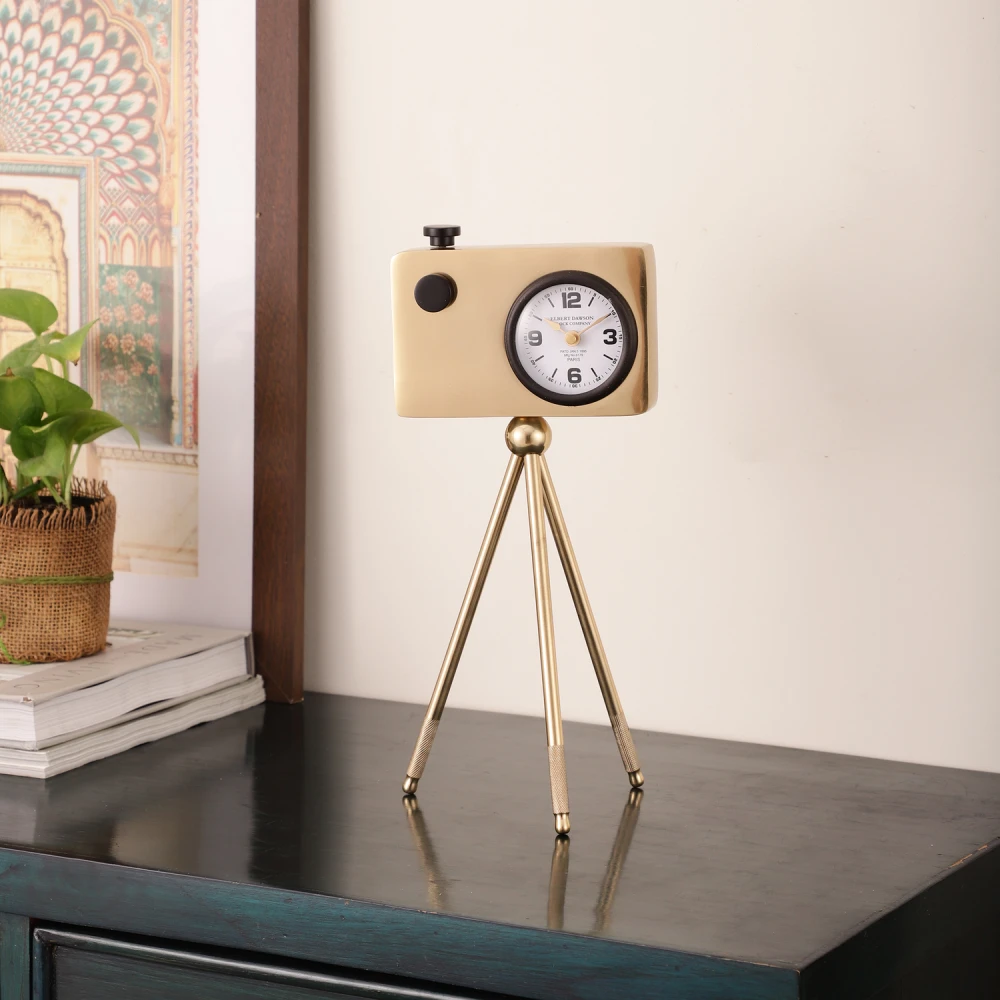
Table Clock 10 Products
- Filter
- Product Type
- Size
- Rating
- Sort
- Delivery
- Discount
- Color
- Brand
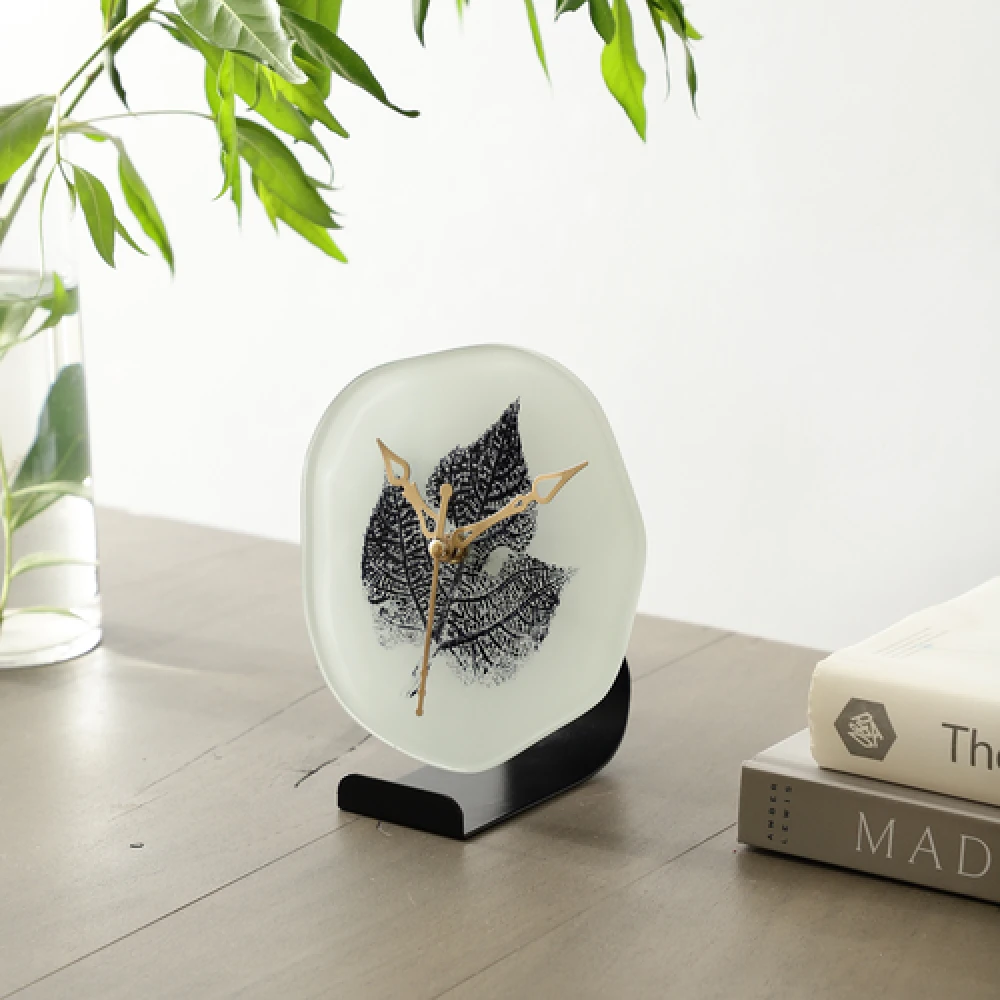
Add practical timekeeping and decorative detail to your interiors with thoughtfully selected table clocks. Designed to sit on desks, bedside tables, shelves, consoles and other suitable surfaces, table clocks provide an easy way to keep track of time without requiring wall installation.
From compact clocks for workspaces and bedside furniture to more decorative designs for consoles and display shelves, a table clock can serve as both a useful everyday accessory and an attractive part of your home decor.
At InteriorChowk, explore Table Clock designs from the Clocks collection. Choose according to the available surface space, dial visibility, colour, design, material and overall interior style.
A table clock is a freestanding timekeeping accessory designed to be placed on a flat surface rather than mounted on a wall.
It can be positioned on a bedside table, study desk, office desk, console, shelf, side table or display unit depending on its dimensions and design.
Table clocks can range from simple functional designs to decorative clocks featuring distinctive frames, glass detailing, metallic finishes and artistic shapes.
Since the clock remains visible as part of the furniture arrangement, its size, colour, finish and overall form can contribute to the appearance of the surrounding Decor.
Decorative table clocks place greater emphasis on visual design as well as practical timekeeping.
They may feature distinctive shapes, artistic frames, decorative textures or contrasting colour combinations that make them suitable for display on consoles, shelves and side tables.
A decorative table clock can become a small focal point without occupying as much space as a larger decorative object.
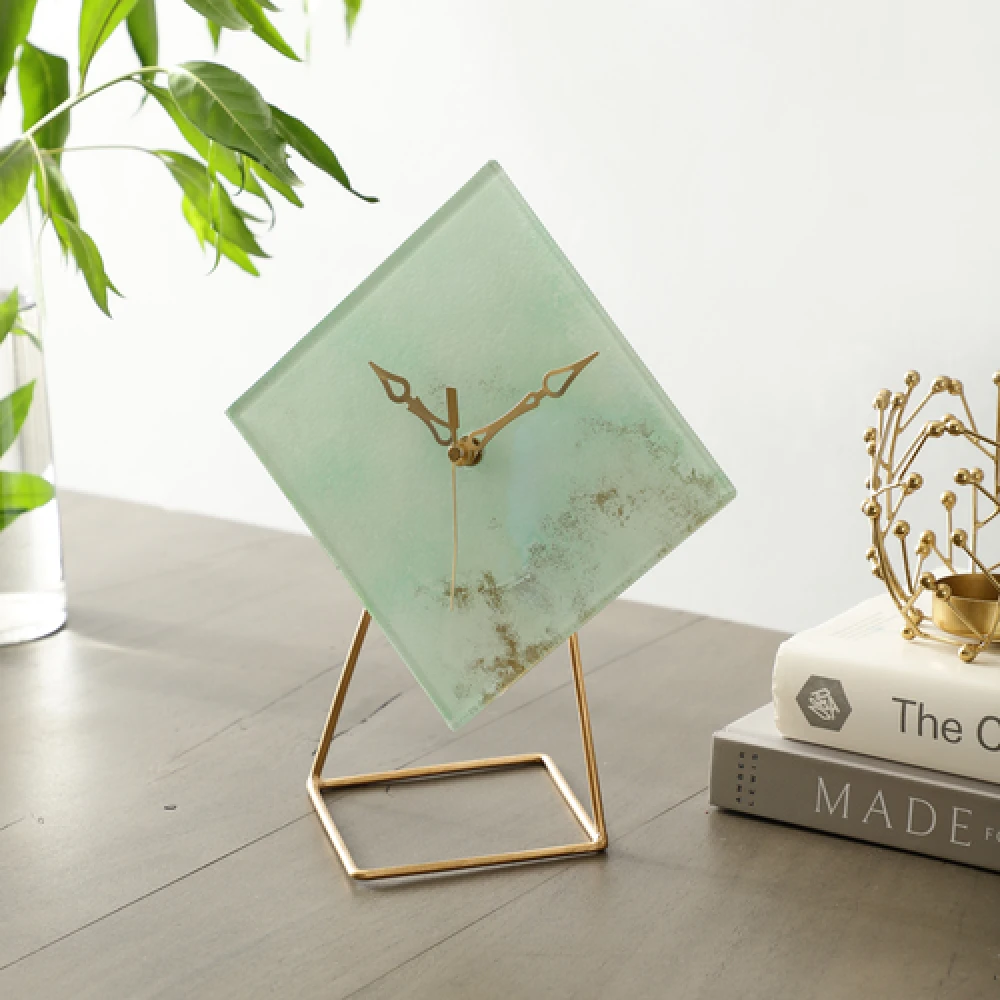
Glass embossed table clocks can feature decorative glass surfaces and textured visual detailing that add a more refined appearance to the clock.
These clocks can work well on consoles, display shelves, side tables and other furniture where their decorative details remain clearly visible.
Handle glass components carefully while cleaning, repositioning or storing the clock.
A table clock can be used as a desk clock in a home office, study room or professional workspace.
For desk use, choose a design with a clear dial and dimensions that do not take up unnecessary working space.
Position the clock outside the main laptop, keyboard, writing and document area so that it remains useful without interfering with everyday tasks.
Table clocks can also be placed on bedside furniture where quick time visibility is useful.
A compact design can leave sufficient space for lamps, books, phones and other everyday bedside items.
Consider how easily the dial can be read from the bed before choosing the clock size and position.
Freestanding clock designs with decorative stands can add height and structure to shelves, tables and consoles.
Check the base width and overall stability before positioning a taller stand-style clock on narrow furniture.
Keep the clock away from furniture edges where it could be accidentally knocked over.
Statement table clocks use distinctive shapes, finishes or decorative details to attract greater visual attention.
These clocks can work particularly well on consoles and display shelves where sufficient open space exists around the product.
Avoid surrounding a statement clock with too many competing accessories.
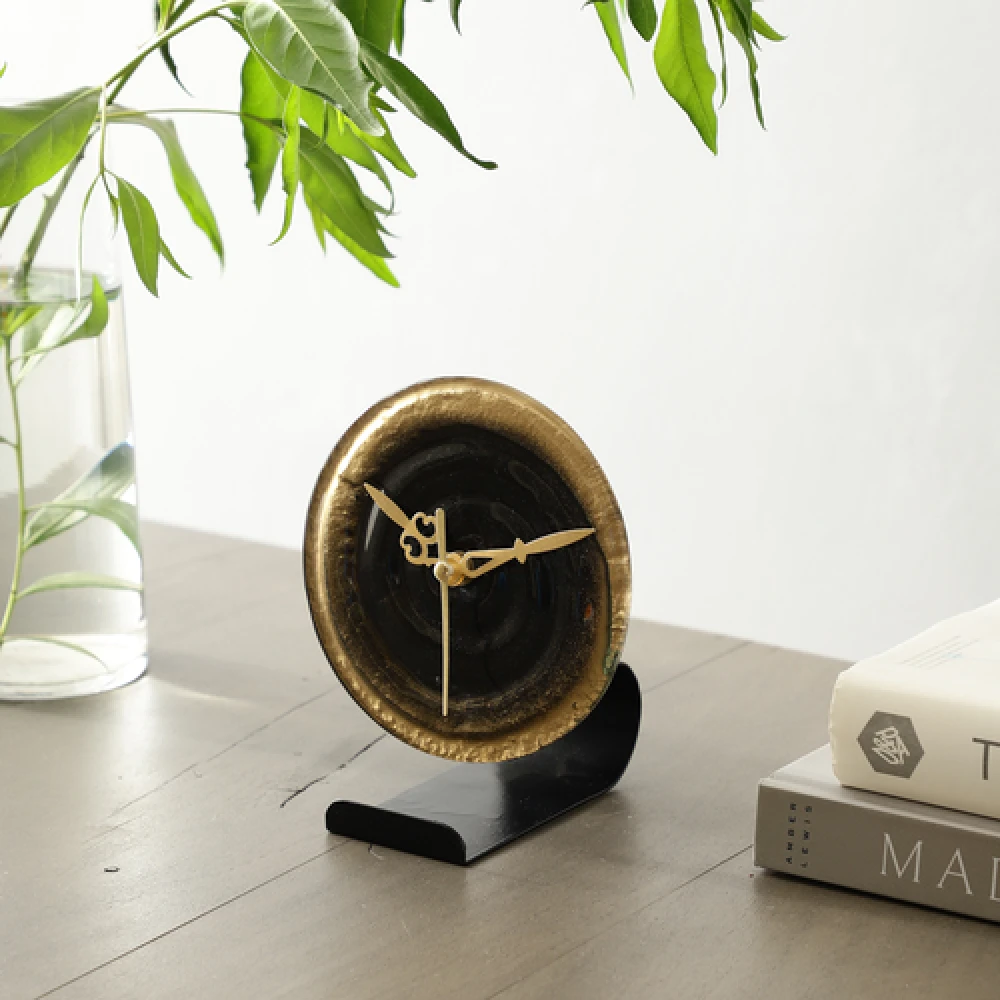
Black table clocks can provide strong contrast against lighter furniture and neutral walls.
They can coordinate naturally with contemporary furniture, black hardware, lighting fixtures and modern decorative accents.
Gold and gold-tone table clocks can add a warmer and more decorative appearance.
They may work particularly well with premium-looking, contemporary and traditional interiors containing similar metallic accents.
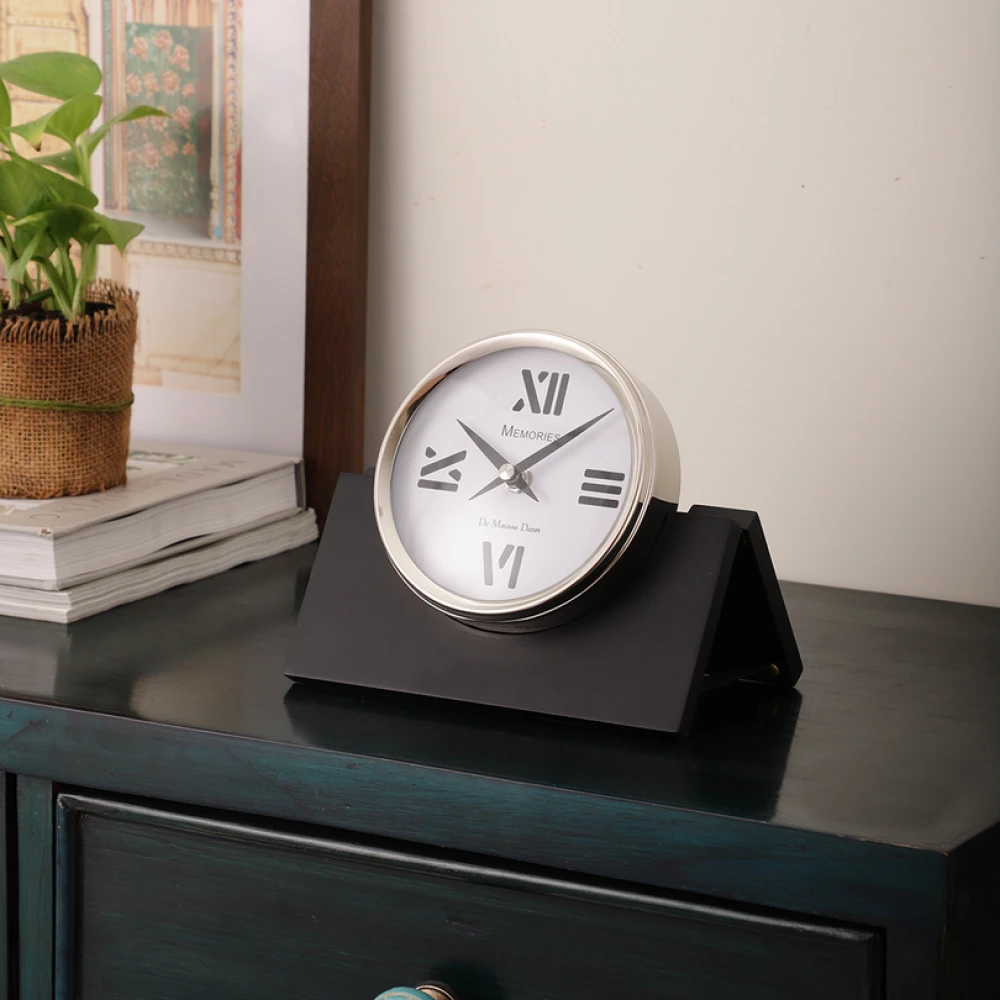
Silver-tone designs can provide a cooler metallic appearance and can complement modern and contemporary furniture arrangements.
They can be paired with glass, black, grey and other neutral decor depending on the overall room palette.
White table clocks can create a lighter visual appearance and may blend naturally into neutral, minimal and contemporary interiors.
They can work particularly well on darker furniture where a contrasting decorative element is preferred.
Green table clocks can introduce colour into a neutral furniture arrangement.
A coloured clock can work as an accent piece when surrounding accessories are kept relatively simple.
Grey clocks can provide a versatile neutral option for modern workspaces, bedrooms and contemporary interiors.
Grey finishes can coordinate easily with black, white, wood and metallic furniture details.
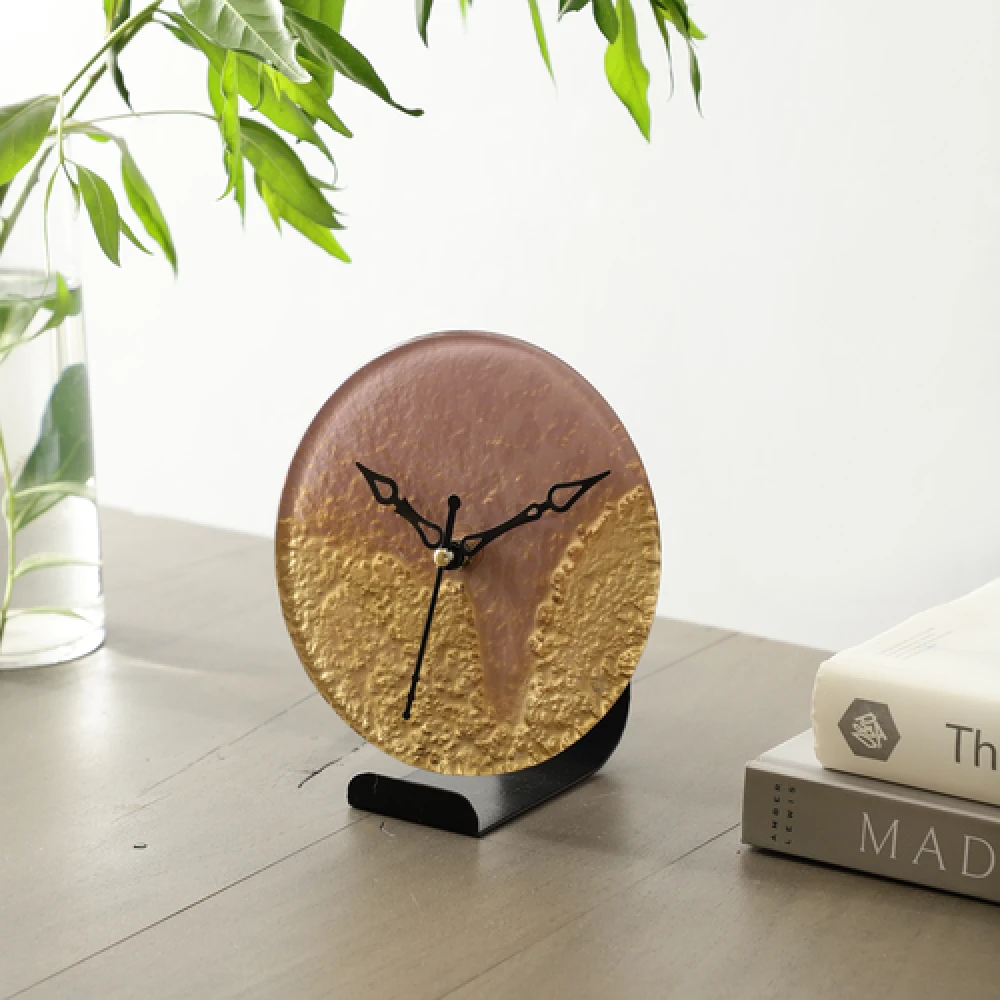
Gold and brown combinations can create a warmer decorative appearance.
These colour combinations can work particularly well alongside wooden furniture and interiors featuring warm neutral shades.
Bedrooms are a practical location for table clocks because bedside tables, dressers and shelves provide convenient surfaces for placement.
Choose a design that remains easy to read while fitting comfortably alongside other bedroom essentials.
Compact clocks can work particularly well where bedside furniture has limited available space.
Decorative table clocks can become part of living-room console, shelf, side-table or display-unit arrangements.
Coordinate the clock colour and finish with nearby furniture, lighting and decorative accessories.
More decorative designs can act as small statement pieces within larger living-room arrangements.
A table clock can provide convenient time visibility while working without requiring a separate wall installation.
Choose a clock with an easy-to-read dial and position it outside the main working area.
Simple designs may be suitable for highly functional workspaces, while decorative designs can add personality to a home office.
Students and home-study spaces can use table clocks for convenient time visibility during reading and study sessions.
Choose a compact design that does not take up excessive desk space or become visually distracting.
A decorative table clock can become part of an entrance or foyer console arrangement.
Pair it with selected decorative objects while leaving enough free surface space for practical everyday use.
Consider the clock height and colour in relation to any artwork or wall accessories positioned behind the console.
Open shelves and display units can use table clocks as functional decorative accessories.
Position the clock where its dial remains visible rather than placing larger objects directly in front of it.
Combine it with books and carefully selected decor while maintaining enough open space around each item.
Begin by measuring the desk, shelf, bedside table or console where the clock will be placed.
Consider both the clock dimensions and the other objects that need to remain on the same surface.
A decorative clock should enhance the arrangement without making the furniture difficult to use.
Clock height influences both visibility and visual balance.
Taller clocks may create greater decorative impact, while compact designs can work better on crowded or smaller furniture surfaces.
Make sure enough vertical clearance is available when positioning a clock inside a shelf or display unit.
Width and depth are particularly important for desks and narrow shelves.
The complete base should sit securely on the furniture rather than extending beyond the edge.
A freestanding table clock should remain stable during normal use.
Review the shape and dimensions of the base, particularly for taller or decorative stand clocks.
Avoid placing unstable clocks close to furniture edges.
Decorative styling should not make the clock difficult to use.
Consider the visibility of the clock hands, numerals or hour markers against the background of the dial.
For desk and bedside use, the dial should be easy to read from the normal viewing position.
Colour can help the clock either blend into the furniture arrangement or stand out as an accent piece.
Neutral shades can provide greater decorating flexibility, while black, gold and other stronger colours can create more visual contrast.
Table clocks may incorporate glass, metallic finishes and other decorative materials depending on the individual design.
Choose a finish that coordinates naturally with your surrounding furniture and accessories.
Also consider how easily the material can be cleaned and maintained.
Review the product specifications for details about the clock movement, power source and battery requirements.
Different products can use different mechanisms, so follow the instructions supplied with the individual clock.
Start by checking how much usable surface space remains after accounting for other bedside essentials.
Choose a compact clock that sits securely without being positioned too close to the edge.
Check whether the dial can be read comfortably from your normal sleeping position.
Also consider how the colour and design coordinate with the bedside table, lamp and surrounding bedroom decor.
A desk clock should provide convenient time visibility without reducing valuable working space.
Consider a compact design with a clear dial that can be positioned beside a monitor, laptop or stationery area.
Avoid placing the clock where it obstructs screens, cables or frequently used work accessories.
For professional-looking workspaces, choose a finish that coordinates naturally with the desk and nearby furniture.
When decoration is an important consideration, look beyond the clock face and consider the complete shape and structure of the product.
Decorative glass details, metallic finishes and distinctive stands can influence how the clock works with surrounding accessories.
Check the complete dimensions rather than judging the product only from photographs.
A decorative clock generally works best when enough open space remains around it for the design to be clearly visible.
A decorative table clock can become the central accessory on a compact console, shelf or side table.
Keep nearby objects limited so the clock remains easy to see.
Table clocks can be styled alongside books to create variation in height and shape on shelves or consoles.
Make sure books do not block the dial and that the arrangement remains stable.
A clock can be paired with taller and shorter decorative accessories to create a layered tabletop display.
Avoid placing every item at exactly the same height, but keep the overall arrangement visually balanced.
Do not fill every section of a desk, table or console with decorative objects.
Empty space around a table clock can make the product more noticeable while keeping the surface easier to use.
Use one or two connecting colours between the clock and surrounding accessories.
For example, a metallic clock may coordinate naturally with similar hardware or decorative finishes elsewhere in the room.
Position the clock where the dial can be seen easily without requiring unnecessary movement.
Leave enough space for lamps, phones and other frequently used items.
Place the clock toward one side of the desk rather than directly in the primary working area.
Make sure it remains visible without blocking screens or paperwork.
A decorative table clock can be paired with selected accessories to create an attractive entrance or living-room arrangement.
Use different heights and leave sufficient open surface space.
Position a table clock between books and decorative objects where its face remains clearly visible.
Make sure the shelf provides sufficient height and depth for the complete clock.
A compact table clock can be used on a side table where easy time visibility and decorative styling are both useful.
Keep enough space for other everyday objects and avoid placing the clock directly at the edge.
Modern interiors can work well with table clocks featuring clean structures, black finishes, metallic details and contemporary decorative elements.
Choose a design that complements the furniture without introducing unnecessary visual clutter.
Glass and metallic details can provide additional decorative interest where a more refined appearance is preferred.
Minimalist interiors generally benefit from simple arrangements and carefully selected decorative accessories.
Choose one table clock that provides both practical timekeeping and sufficient visual interest.
Leave open space around the clock rather than surrounding it with numerous small decorative objects.
Contemporary spaces can use distinctive shapes, contrasting colours and decorative finishes to create more expressive tabletop displays.
A decorative table clock can be paired with simple furniture to create a controlled focal point.
Gold-tone, silver-tone, glass and other refined decorative finishes can contribute to a more premium-looking arrangement.
Use stronger decorative clocks selectively so they complement rather than compete with other statement accessories.
Table clocks and wall clocks both provide timekeeping but differ mainly in placement and the way they use available space.
A Table Clock is freestanding and can be placed on desks, shelves, bedside tables and consoles.
A Wall Clock is mounted on a suitable wall and can provide greater visibility across larger spaces without using furniture surfaces.
Choose a table clock where portability and close-range viewing are useful. Choose a wall clock where you want to keep furniture surfaces clear or need wider visibility across the room.
Both can contribute to tabletop styling, but a table clock also provides the practical function of displaying time.
A decorative showpiece is generally chosen mainly for its visual appearance, while a table clock needs to balance design with dial readability.
In smaller arrangements, a decorative table clock can sometimes provide enough visual interest without requiring several additional accessories.
Table clocks can use different display and movement formats depending on the individual product.
Traditional dial-based designs display time using clock hands, while digital clocks use numerical displays.
Check the individual product specifications rather than assuming every table clock uses the same mechanism or display type.
Choose according to your preferred appearance, readability and intended placement.
A table clock can be a useful addition to a home office, study room or professional desk setup.
Choose a clock that can be viewed quickly without requiring you to check another device for the time.
Keep the design proportionate to the desk and make sure enough workspace remains available for essential equipment.
Decorative table clocks can be considered for housewarming, wedding, anniversary and other home-oriented gifting occasions.
They can be particularly useful gifts because they combine practical timekeeping with decorative value.
When the recipient's exact decor style is unknown, versatile colours such as black, neutral shades or understated metallic finishes may be easier to coordinate.
More decorative designs can be selected where the recipient's preferred interior style is already known.
Dust can collect on the dial, frame, stand and decorative details over time.
Use a suitable soft cloth or cleaning method appropriate for the clock material.
Where the clock includes glass or embossed glass details, handle the product carefully during cleaning.
Avoid abrasive cleaning methods that may scratch or damage decorative surfaces.
Metallic and painted surfaces may require gentle cleaning to maintain their appearance.
Follow any care instructions supplied with the individual product.
Where the clock is battery-operated, use the battery type recommended by the manufacturer.
Replace the battery when required and install it according to the specified orientation.
Place the clock on a flat and stable surface.
Avoid positioning it at furniture edges or in areas where it may be frequently knocked or disturbed.
Start by deciding where you need practical time visibility and how much surface or wall space is available.
Choose a Table Clock for bedside tables, desks, consoles and shelves where a freestanding design is more practical.
Explore Wall Clock options where you want to save tabletop space or create a larger wall-based decorative feature.
Browse the complete Clocks collection to compare both formats according to the requirements of different rooms.
Coordinate the clock colour, size and finish with surrounding Decor while keeping practical dial readability and placement in mind.
Add practical timekeeping and decorative detail to bedrooms, workspaces, living rooms, shelves and consoles with Table Clock designs.
Explore table clocks according to your preferred colour, design, decorative finish, available surface space and intended room.
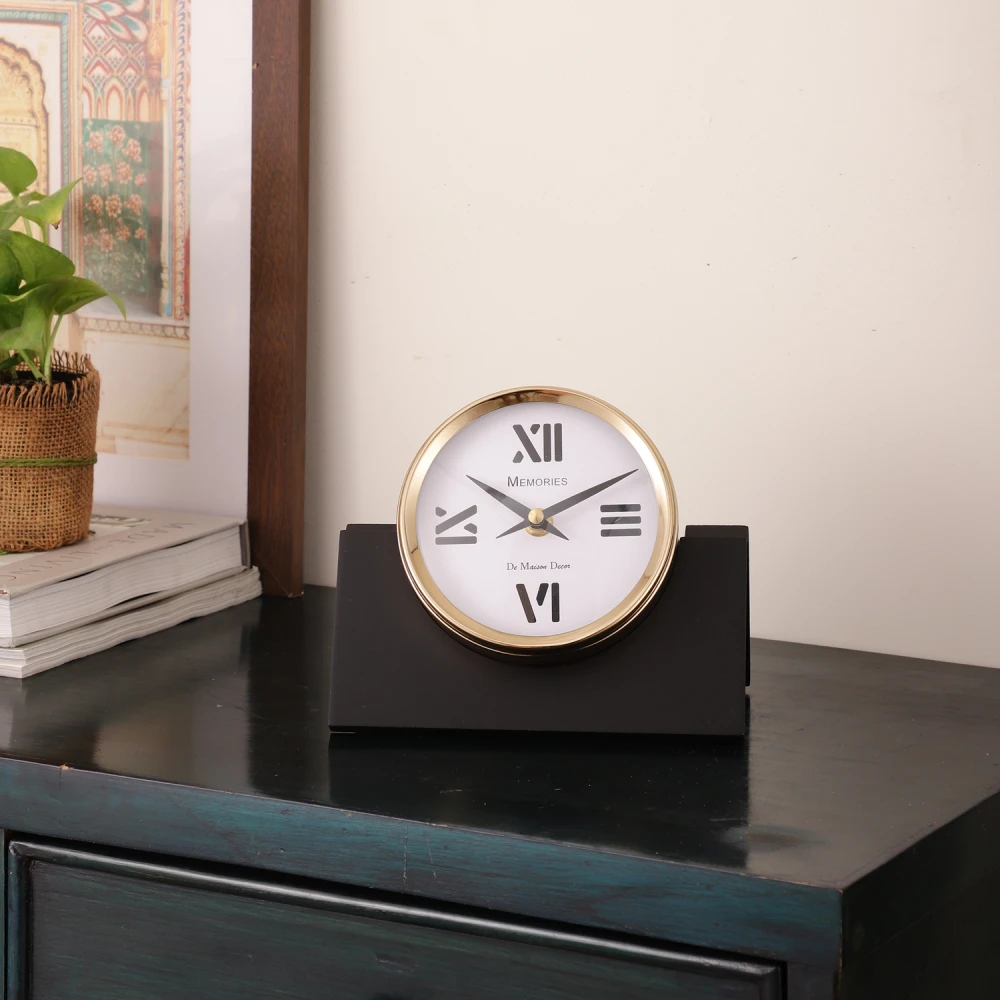
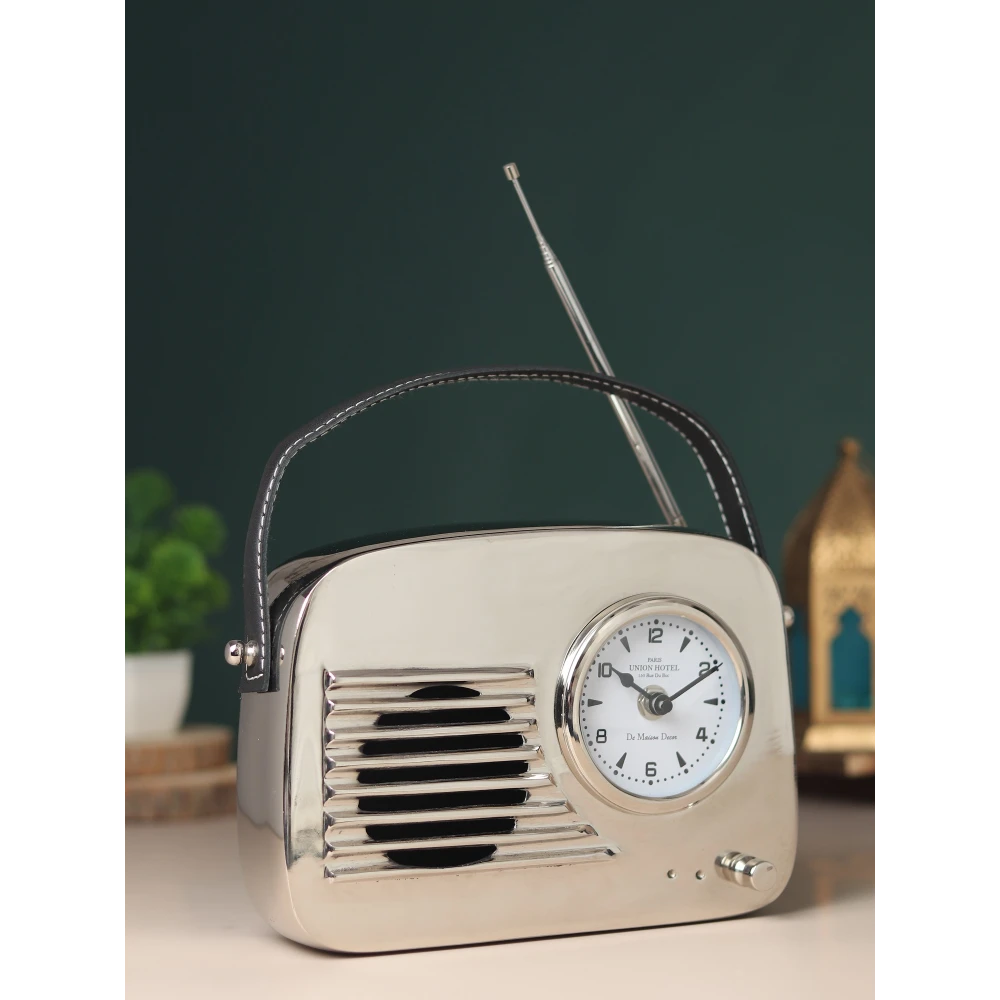
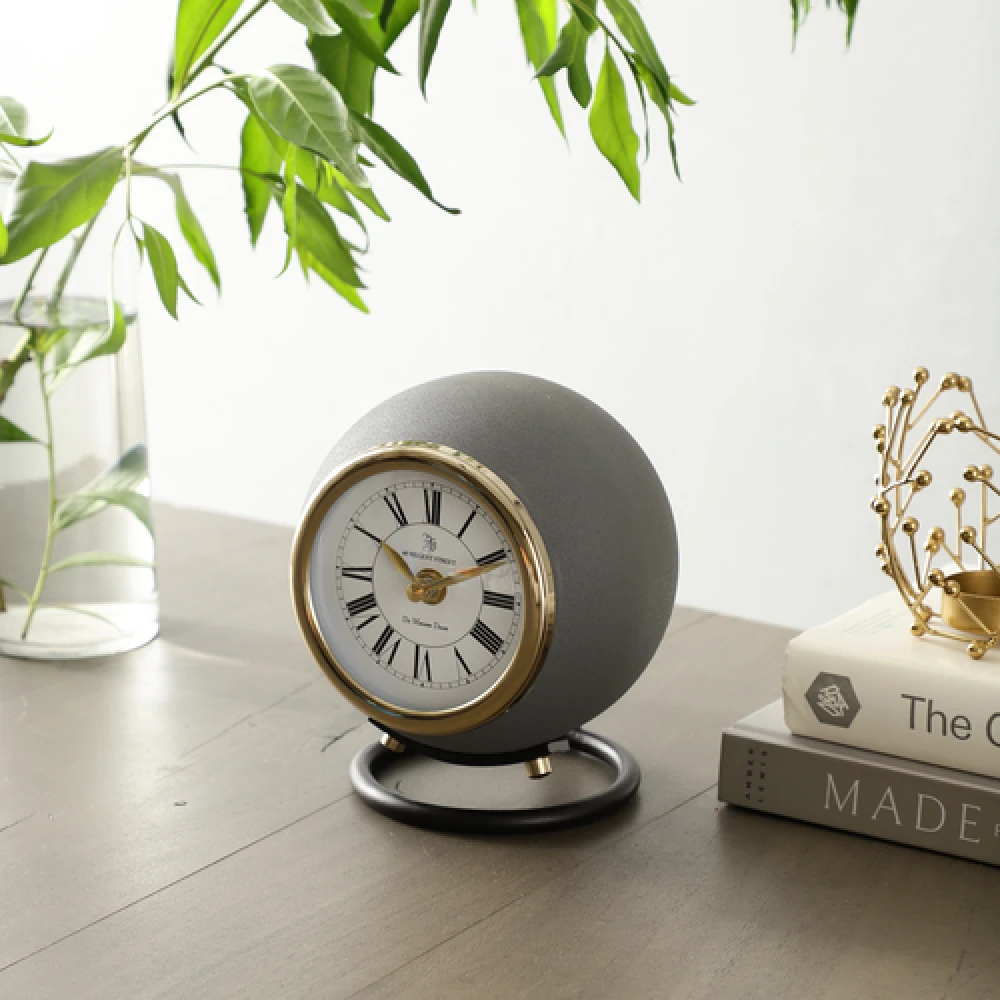
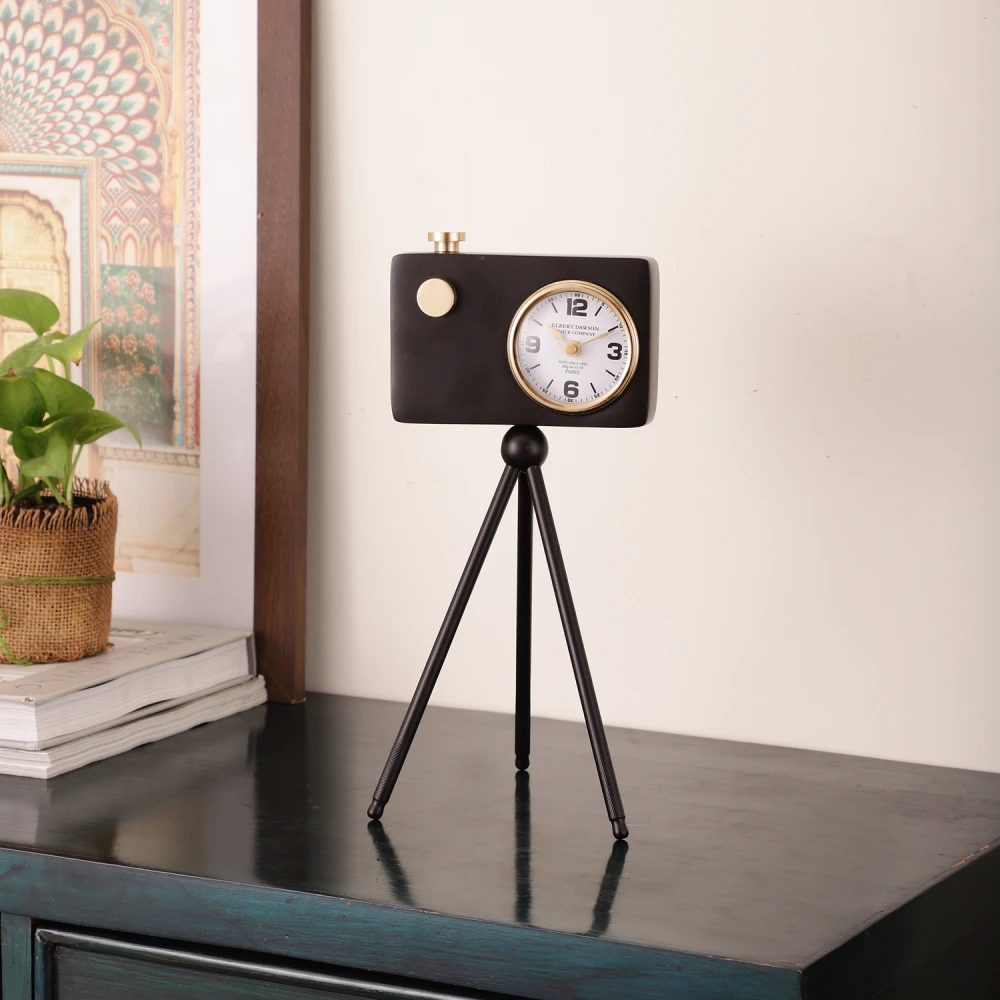
Current designs include decorative table clocks in colours such as black, gold, silver, grey, green, white and brown combinations, giving you different options for coordinating with existing furniture and interiors.
Compare the clock dimensions, dial visibility, base stability, colour, material, mechanism, power requirements and maintenance needs before making a selection.
Browse the wider Clocks range and explore Wall Clock options where a wall-mounted design is more appropriate.
Choose a table clock that fits comfortably on the intended surface, remains easy to read and works naturally with the surrounding Decor for a functional and visually balanced interior.