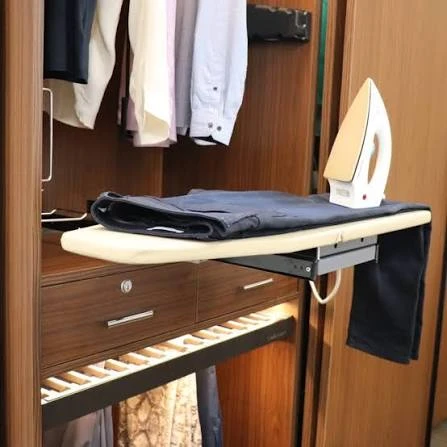
Ironing Board 10 Products
- Filter
- Product Type
- Size
- Rating
- Sort
- Delivery
- Discount
- Color
- Brand

Make everyday garment care more convenient with a practical ironing board designed to provide a dedicated surface for pressing clothes, bedsheets and other suitable fabrics. A well-designed ironing board can make regular ironing more organised while providing a stable working surface at a comfortable height.
Ironing boards are available with different features such as foldable frames, adjustable heights, wide ironing surfaces, padded covers, built-in iron holders, retractable iron rests and anti-skid feet. Choosing the right model depends on your available space, frequency of use, storage requirements and the type of garments you usually iron.
At InteriorChowk, explore Ironing Board options from the Home Utility collection. Compare dimensions, working height, surface size, folding mechanism, frame construction and other practical features before making your selection.
An ironing board is a raised, padded surface specifically designed to support clothes and fabrics while they are being ironed.
Unlike an ordinary table or bed, an ironing board generally has a narrow tapered end, padded working surface and foldable supporting frame that can make handling different parts of a garment easier.
Depending on the model, the board may also include adjustable height, an iron rest, non-slip feet and other features designed for convenient household use.
Before purchasing, check the complete dimensions of the board when both open and folded so that it suits your ironing and storage space.
Foldable ironing boards are practical for homes where the board cannot remain permanently open.
Once ironing is complete, the frame can be folded to reduce the amount of storage space required.
This makes foldable models particularly useful for apartments, compact homes, utility rooms and bedrooms with limited free space.
Check the folding mechanism carefully and make sure the board locks securely into position during use.
Height-adjustable ironing boards allow users to modify the working level according to their preferred position.
This can make the board more practical where different members of a household use the same ironing setup.
Before ironing, make sure the selected height setting is properly locked and that the frame remains stable.
Some ironing boards include a built-in or retractable iron rest near one end of the working surface.
This provides a designated place for temporarily positioning a compatible iron while garments are being adjusted.
Check the size and design of the holder to ensure that it is suitable for the type of iron you use.
Never leave a heated or switched-on iron unattended, even when it is positioned on an iron rest.
A wider ironing surface provides additional working area and can make it easier to reposition larger garments and household fabrics.
Wide boards can be useful for shirts, trousers, dresses, bedsheets and other suitable textiles.
Larger boards also require more floor and storage space, so compare the dimensions with the area available in your home.
Ironing boards generally include padding beneath the outer cover to create a suitable pressing surface.
Some current InteriorChowk designs specifically feature thicker padding as part of their construction.
Check the cover and padding condition periodically and follow product-specific care instructions.
Anti-skid or non-slip feet are designed to help reduce unwanted movement of the board on suitable flooring.
Place the board on a flat and level surface and check that all legs are fully opened before switching on the iron.
Worn or damaged feet should be addressed according to the product manufacturer's instructions.
Heavy-duty ironing boards generally focus on stronger frame construction and stability for regular household use.
When comparing these models, look at the frame structure, joints, locking system and total dimensions rather than relying only on the term heavy duty.
For regular home ironing, look for a balance between working surface, stability and convenient storage.
A board that is unnecessarily large may be difficult to store, while a very small ironing surface may require more frequent repositioning of garments.
Consider how often you iron and which garments are handled most frequently before selecting a particular board size.
Compact homes require careful use of available space.
A foldable Ironing Board can provide a full working surface when required and then be stored vertically or in another suitable location.
Before purchasing, measure both the intended ironing area and the location where the folded board will be kept.
Avoid storing it where it blocks doors, wardrobes or frequently used walkways.
Shirts require ironing across several different areas including the front panels, back, sleeves and collar.
The tapered end of an ironing board can make it easier to position narrower garment sections while the wider surface supports larger areas.
Reposition garments carefully instead of allowing fabric to bunch excessively beneath the iron.
A stable, sufficiently long ironing surface can make it easier to work along trouser legs in sections.
Choose a board with enough working area for comfortable repositioning while keeping the iron and power cord safely managed.
Dresses, kurtas and other longer garments may require repeated repositioning during ironing.
A wide, stable ironing board can provide a practical surface for working across larger fabric sections.
Always follow the garment's fabric-care instructions and use an appropriate iron temperature.
Bedsheets and other large household textiles generally require section-by-section ironing because they are larger than the board itself.
A wide ironing surface can reduce the number of times the fabric needs to be repositioned.
Keep excess fabric clear of the iron's power cord and other potential hazards while working.
Begin by reviewing the length and width of the working surface.
Larger boards provide more ironing space but also require more room while open.
Compare the product dimensions with the space where you normally iron.
Check whether the ironing board provides height adjustment and review the available settings where they are specified.
Select a working height that allows comfortable use without excessive bending or reaching.
A stable frame is important because ironing involves repeated movement across the working surface while using a heated appliance.
Check the legs, joints and locking mechanism before each use.
The board should not rock or shift excessively when normal pressure is applied.
Where the board will be stored after every use, an easy and secure folding mechanism becomes particularly important.
Follow the product instructions when opening and closing the frame to avoid trapping fingers in moving joints.
If you regularly pause while ironing, a dedicated iron holder may provide additional convenience.
Review its construction and position and make sure your iron can be placed there safely according to its manufacturer's instructions.
Inspect the outer cover material and padding information where provided.
A smooth, properly fitted cover helps maintain an even working surface.
Replace or maintain damaged covers according to the manufacturer's recommendations.
Measure the board's folded dimensions and decide where it will be stored before ordering.
A product can be suitable while open but inconvenient if its folded size does not fit your available storage area.
Large ironing boards provide greater working surface and can be convenient when handling bigger garments or household fabrics.
Compact boards require less room and may be easier to move and store.
The better choice depends on available floor space, storage, ironing frequency and the type of fabrics you normally handle.
Adjustable ironing boards allow the working height to be changed, while fixed-height designs remain at one predetermined level.
Adjustable models can be more versatile in households where several people use the same board.
Whichever design you choose, stability and secure locking are important considerations.
A regular table is primarily designed as furniture and may not be intended for repeated exposure to ironing heat and pressure.
An ironing board provides a purpose-built padded surface and may also include features such as height adjustment, a tapered end and iron rest.
It can therefore provide a more dedicated setup for regular garment care.
Regular maintenance can help keep the board practical and safe for everyday use.
Remove loose dust from the ironing surface and clean the cover according to its specific care instructions.
Check the frame, joints, height adjustment and folding mechanism periodically for signs of wear or looseness.
Keep metal components dry where appropriate and store the board in a clean location after it has cooled.
Choose an Ironing Board that provides a practical balance of working space, stability and easy storage.
Foldable and height-adjustable designs can be particularly useful where several household members use the board or where storage space is limited.
Compare wide surfaces, padded covers, iron holders, stable frames and anti-skid features according to your everyday ironing requirements.
Discover Ironing Board options for regular garment care, shirts, trousers and suitable household fabrics.
Explore foldable, adjustable and wide-surface designs with features such as built-in or retractable iron rests, padded surfaces, stable frames and non-slip feet depending on the model.
Compare dimensions, height adjustment, frame construction, storage requirements and additional features before making your selection.
Browse Home Utility for related household-use products and explore the wider Furnishing collection for additional practical and decorative home essentials.