


2026-09-25 15:34:38
Published By: Samriddhi Bhatnagar
Dussehra: History, Significance, Story & Why We Celebrate Vijayadashami
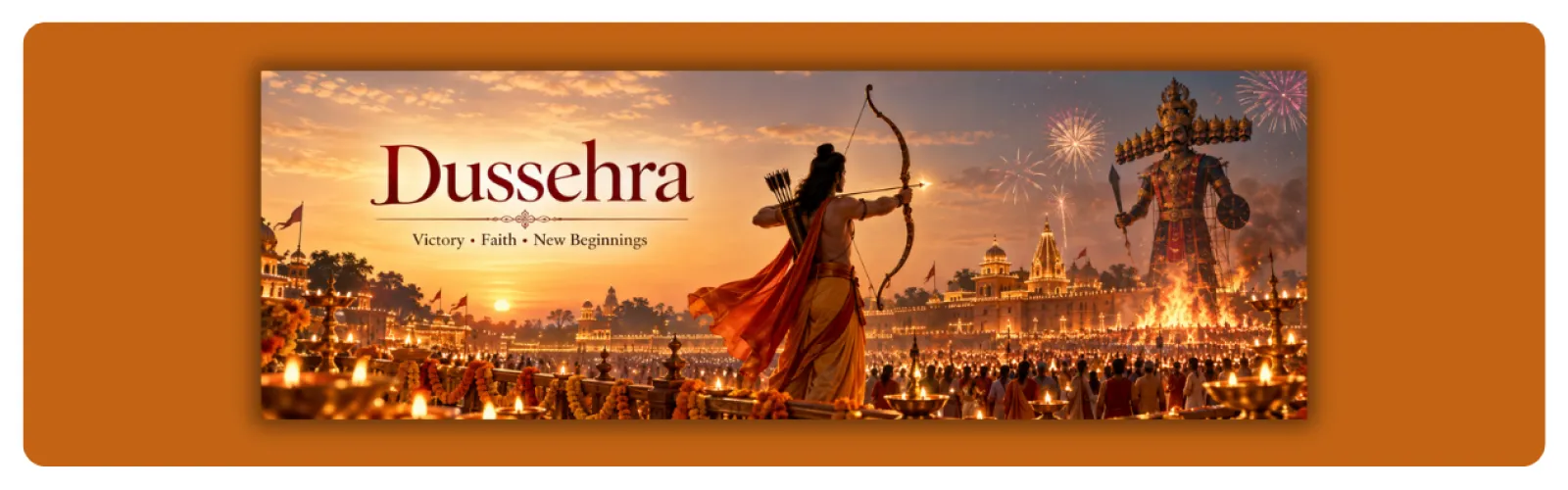
Dussehra is a festival of victory, courage and new beginnings. Celebrated after the nine nights of Sharad Navratri, it is also known as Vijayadashami in many parts of India.
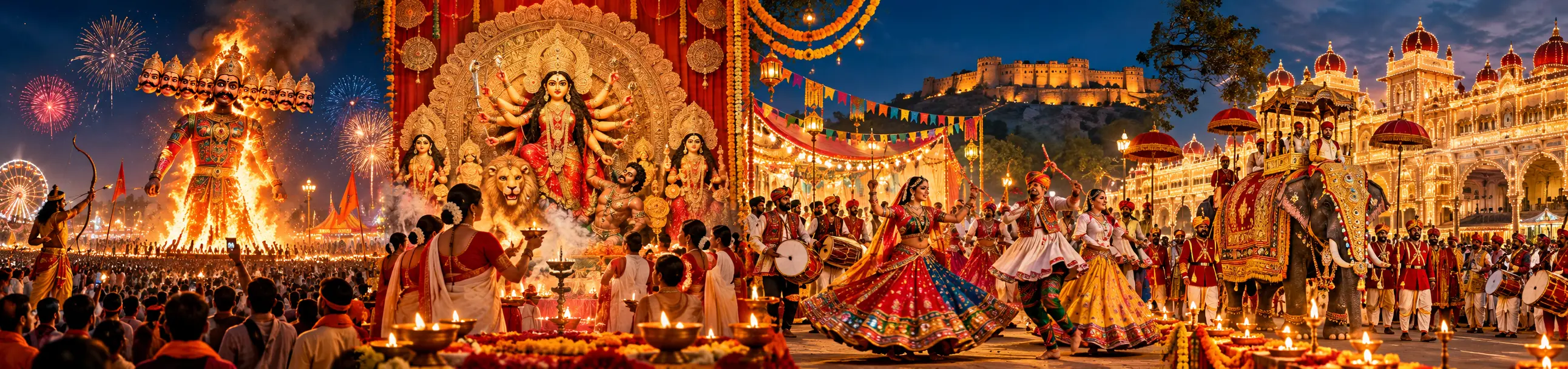
The Dussehra festival does not look exactly the same everywhere. In many North Indian traditions, it recalls Lord Rama's victory over Ravana. In Bengal and traditions connected with Durga Puja, Vijayadashami marks the conclusion of the worship of Goddess Durga. Places such as Mysuru and Kullu have developed their own distinctive celebrations over centuries.
Together, these traditions make Dussehra a festival with many regional expressions but a shared message of righteousness, courage and renewal.
What is Dussehra?
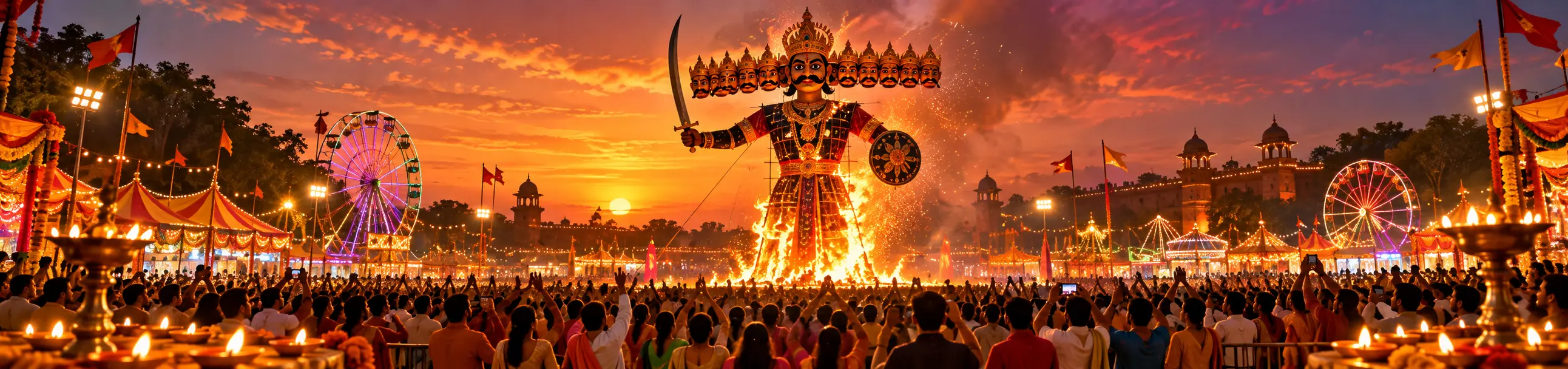
Dussehra is a Hindu festival observed on the tenth day following the nine nights of Sharad Navratri. It generally falls during the Hindu month of Ashvina, corresponding to September or October in the Gregorian calendar.
The Dussehra meaning is closely connected with victory. Dussehra and Vijayadashami are commonly used for the same festival day, although the stories and customs associated with the occasion vary from one region to another.
In the Ramayana tradition, the day is associated with Lord Rama's victory over Ravana. Other traditions connect Vijayadashami with Goddess Durga's victory over Mahishasura.
Rather than having one fixed form of celebration, Dussehra brings together several cultural and religious traditions across India.
Why is Dussehra Celebrated?
Dussehra is celebrated as a reminder that righteousness ultimately prevails over wrongdoing.
One of its best-known traditions comes from the Ramayana, where Lord Rama defeats Ravana after the latter abducts Sita. This story plays an important role in many celebrations across North India.
Another important tradition is associated with Goddess Durga and her victory over Mahishasura. This interpretation is particularly significant in communities where Vijayadashami marks the conclusion of Durga Puja.
Although the stories differ, they share similar themes of courage, justice and overcoming destructive forces. This broader message forms an important part of the significance of Dussehra.
The Story Behind Dussehra
The history and stories associated with Dussehra come from different religious and regional traditions. Among them, the story of Rama and Ravana is one of the most widely recognised.
The Story of Lord Rama and Ravana
According to the Ramayana tradition, Ravana, the king of Lanka, abducted Sita and took her to his kingdom.
Lord Rama set out to rescue her with the support of Lakshmana, Hanuman and the vanara army. Their journey eventually led to a major battle in Lanka.
After an intense conflict, Rama defeated Ravana and Sita was rescued.
Over time, this episode became closely associated with Dussehra celebrations in many parts of India. The story is also brought to life through Ramlila, where episodes from the Ramayana are performed before audiences during the festive period.
Why is Dussehra Called Vijayadashami?
The word Vijaya means victory, while Dashami refers to the tenth lunar day. Vijayadashami can therefore be understood as the tenth day of victory.
It comes after the nine nights of Navratri and represents a victorious conclusion to the festive period.
The meaning of that victory differs according to tradition. For some communities, it recalls Rama's victory over Ravana. For others, it is associated with Goddess Durga defeating Mahishasura.
This is why Dussehra and Vijayadashami are often used interchangeably even though regional customs may differ.
Why Do People Burn Ravana's Effigy?
One of the most recognisable Dussehra traditions is Ravana Dahan.
In many North Indian celebrations, large effigies of Ravana are burned on Dussehra. In some places, effigies representing his brother Kumbhakarna and his son Meghnad are also included.
The burning usually takes place after Ramlila performances and represents the conclusion of the Rama–Ravana story.
Beyond the story itself, Ravana Dahan is often interpreted symbolically. The burning of the effigy can represent letting go of qualities such as arrogance, anger, greed and injustice.
However, Ravana Dahan is not practised everywhere in India. Several regions observe Vijayadashami through completely different traditions.
How is Dussehra Celebrated Across India?
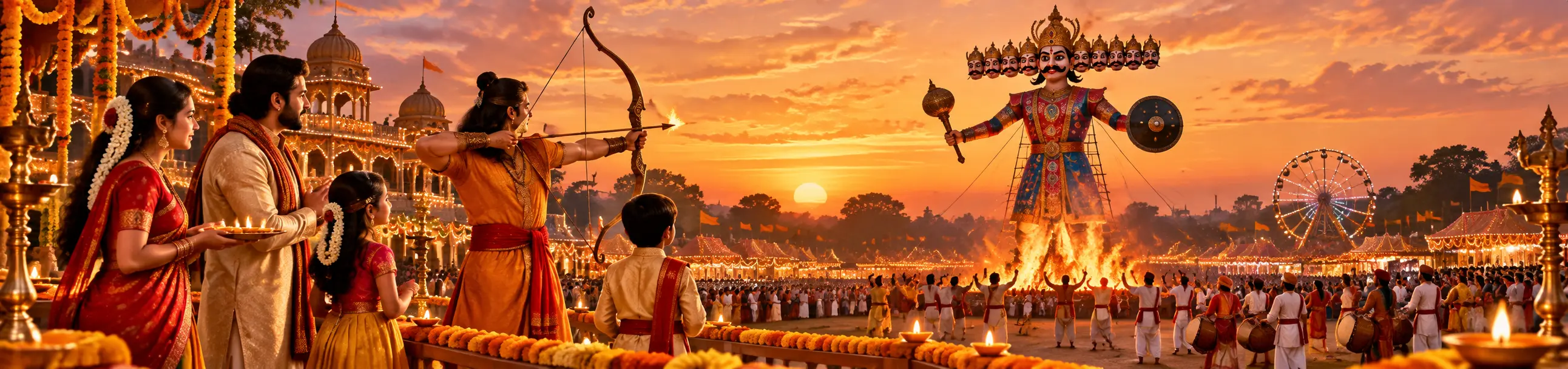
Dussehra celebrations in India reflect the country's cultural diversity. Even when different traditions share themes of courage, devotion and renewal, the way the festival is observed can vary significantly from region to region.
North India
In many parts of North India, the Rama–Ravana story forms an important part of Dussehra.
Ramlila performances are organised during the festive period, recreating episodes from the Ramayana. On Dussehra, celebrations in many places conclude with Ravana Dahan and community fairs.
Delhi is known for large Ramlila performances and public celebrations, while cities such as Varanasi have their own long-standing religious and theatrical traditions.
These customs are common in several places but should not be treated as identical throughout North India.
Eastern India
In Bengal, Vijayadashami is closely connected with the conclusion of Durga Puja.
After days of worship and elaborate pandal celebrations, devotees bid farewell to Goddess Durga. Traditions may include Sindoor Khela among participating communities, followed by Durga Visarjan processions.
Odisha has its own customs as well, including Ravana Podi in some areas.
This is why Eastern India cannot be described through a single Dussehra tradition.
Mysuru Dasara
Mysuru Dasara, also known as Mysore Dussehra, is one of Karnataka's most distinctive festival traditions.
The celebration is associated with Goddess Chamundeshwari and has a strong royal heritage.
Mysuru becomes especially vibrant during Dasara, with cultural programmes, ceremonial events, palace illumination and the famous procession forming important parts of the celebration.
The royal character of Mysuru Dasara is specific to the city and its history.
Kullu Dussehra
Kullu Dussehra in Himachal Pradesh follows a very different tradition.
Its celebrations centre on Lord Raghunath and include the Raghunath Rath procession along with gatherings connected with local deities.
Unlike celebrations that culminate in Ravana Dahan, Kullu Dussehra is rooted in its own devotional and regional traditions.
Maharashtra
Dussehra or Vijayadashami is also celebrated across Maharashtra, but customs can differ between families, communities and locations.
Celebrations may include worship, festive gatherings, flowers and cultural activities. Some locations may also organise Ramayana-based performances or Ravana Dahan.
These practices are not followed uniformly across the state, so Maharashtra's Vijayadashami traditions are best understood within their local context.
Dussehra and Navratri: What's the Connection?
Navratri and Dussehra are closely connected in the festival calendar.
Navratri refers to nine nights, while Vijayadashami follows as the tenth day.
During Navratri, different forms and traditions of the Divine Feminine are worshipped across India. What happens on the tenth day varies according to region.
In Bengal, Vijayadashami marks the conclusion of Durga Puja. In several North Indian traditions, Ramlila performances held during Navratri culminate in the events of Dussehra.
If you're preparing your home for both festivals, explore our 21 Navratri Decoration Ideas for Home in 2026 – Simple, Traditional & Modern.
What Does Dussehra Symbolise?
The significance of Dussehra goes beyond a single story. At its heart, the festival represents the idea of overcoming what is unjust, destructive or harmful.
The Rama–Ravana story is often interpreted as a reminder to choose righteousness over arrogance and injustice. Traditions associated with Goddess Durga similarly celebrate courage in the face of destructive forces.
Dussehra can also encourage personal reflection. The symbolism can remind us to recognise and overcome qualities such as anger, pride, greed and dishonesty in our own lives.
For many families, Vijayadashami therefore becomes a moment of renewal and a positive beginning.
Dussehra Traditions and Customs
There is no single list of Dussehra rituals followed by everyone.
Depending on the region and community, celebrations may include Ramlila performances, Ravana Dahan, Durga Puja farewell rituals, religious processions, temple visits, prayers, Dussehra fairs, cultural programmes and community gatherings.
Families may also decorate their homes, light diyas and arrange a prayer space according to their own traditions.
Each custom has its own regional and cultural context, which is why Dussehra traditions should not be presented as one universal ritual checklist.
Dussehra vs Diwali: What's the Difference?
| Dussehra | Diwali |
|---|---|
| Observed on Vijayadashami after Navratri | Celebrated several weeks after Dussehra |
| In many traditions, associated with Rama defeating Ravana | In the Rama tradition, associated with Rama returning to Ayodhya |
| Ramlila and Ravana Dahan are common in several North Indian celebrations | Diyas, lights and home decoration are widely associated with the festival |
| Includes distinct traditions such as Mysuru Dasara and Kullu Dussehra | Has its own varied religious and regional traditions |
So, although both festivals can be connected through the Ramayana, Dussehra and Diwali are not the same festival.
How to Celebrate Dussehra at Home
A Dussehra celebration at home does not need to be elaborate.
Start by cleaning and arranging a peaceful festive space. A small prayer corner, flowers, warm lights and a few traditional accents can make the home feel festive without overcrowding it.
For a prayer setup, explore InteriorChowk's Pooja Essentials and Idols & Sculptures.
Traditional metallic pieces can also work beautifully in a festive setup. Browse Brass Items for simple pooja and decorative accents.
If you prefer a more decorative setup, use flowers and meaningful Wall Décor rather than filling every corner with festive pieces.
Lighting can help complete the atmosphere, especially in living or gathering areas.
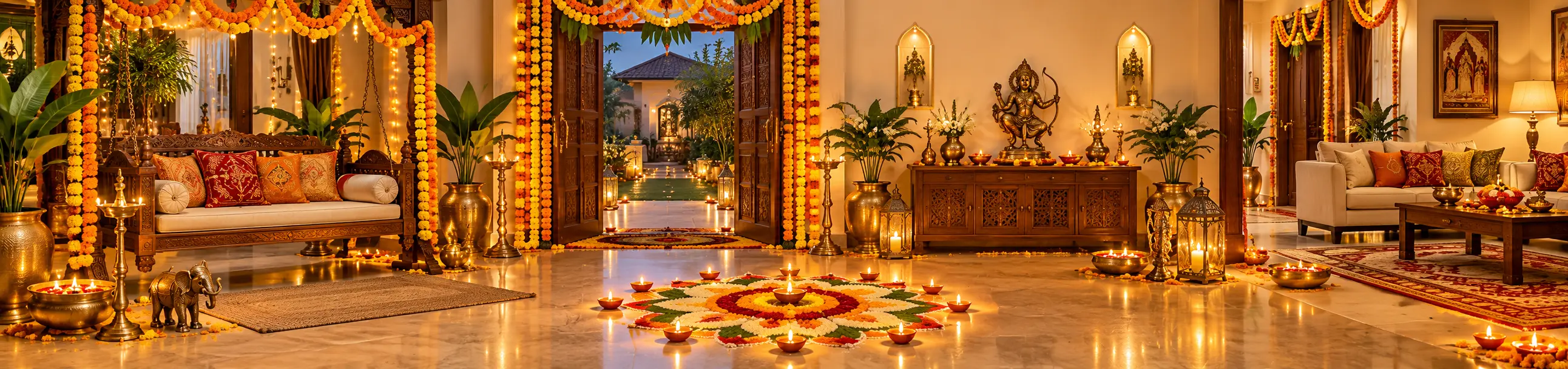
Festive Décor for Your Dussehra Celebration
You don't need too many products to create thoughtful Dussehra decoration ideas at home. A few pieces selected for lighting, devotion and décor can be enough.
Heaven Decor Brass Akhand Jyot Decorative Brass Oil Lamp
A brass oil lamp works naturally in a pooja or festive corner and adds a traditional touch to the setup.
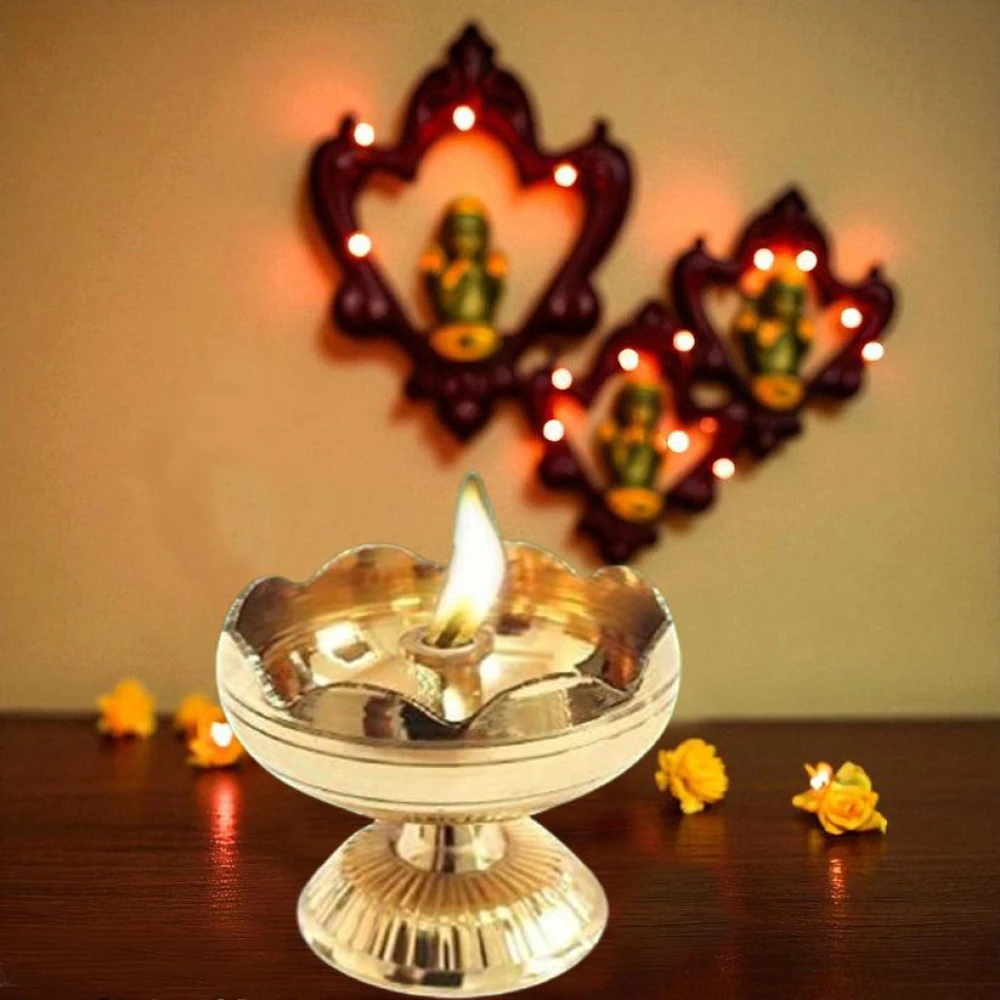
Heaven Decor Brass Akhand Jyot Decorative Brass Oil Lamp
🛒 View ProductStanding Hanuman Religious Statue
For households where Hanuman worship forms part of their devotional tradition, this statue can be placed in an existing prayer or spiritual corner.
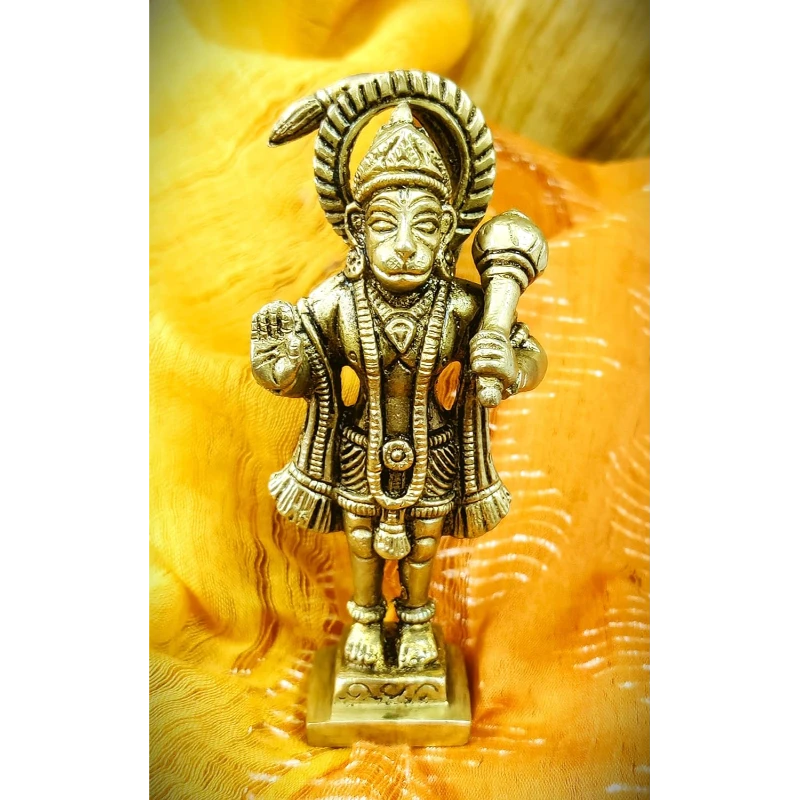
Standing Hanuman Religious Statue
🛒 View ProductFurnishub God Hanuman Chiranjeevi Spiritual Artwork
A devotional wall artwork can add a spiritual element without introducing additional tabletop décor.
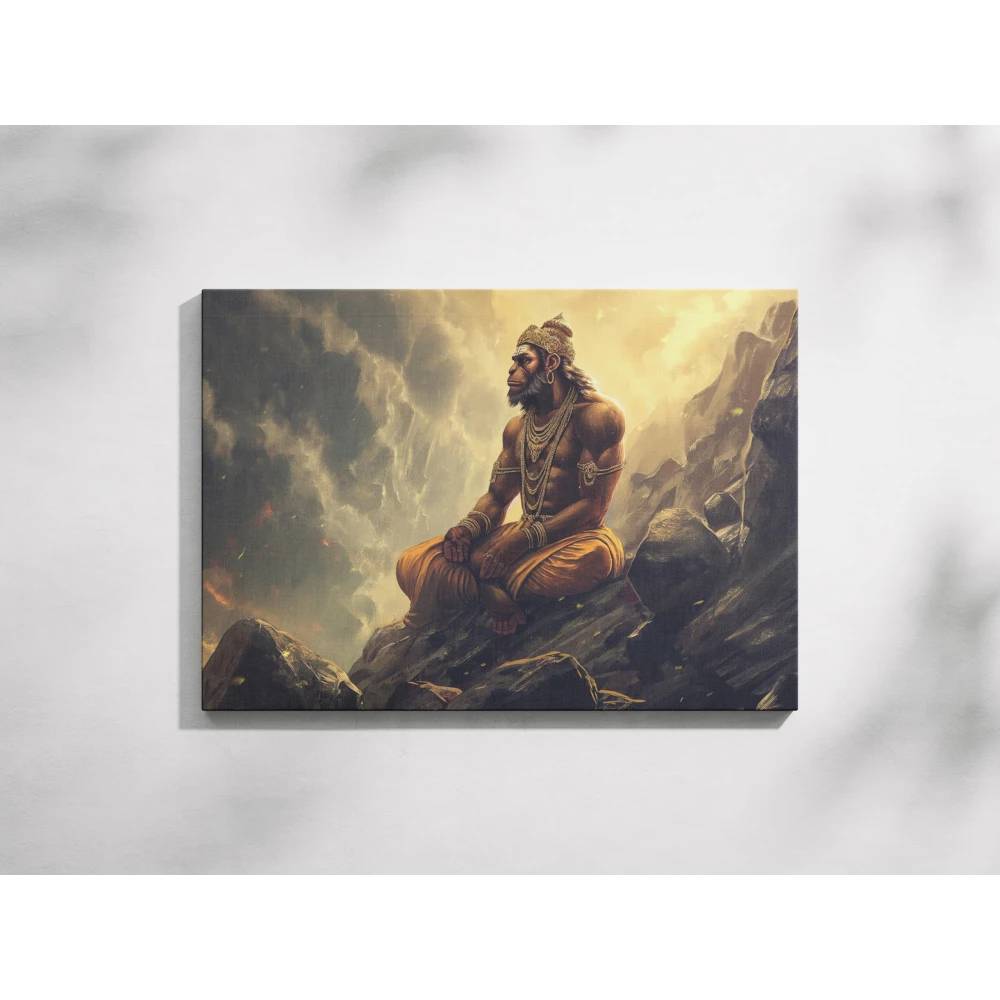
Furnishub God Hanuman Chiranjeevi Spiritual Artwork
🛒 View ProductPRMOAGEN 2 Pcs Crystal Chandelier Light
For a more contemporary festive setting, decorative ceiling lighting can brighten living and gathering spaces.
Explore more options under Ceiling Lights.
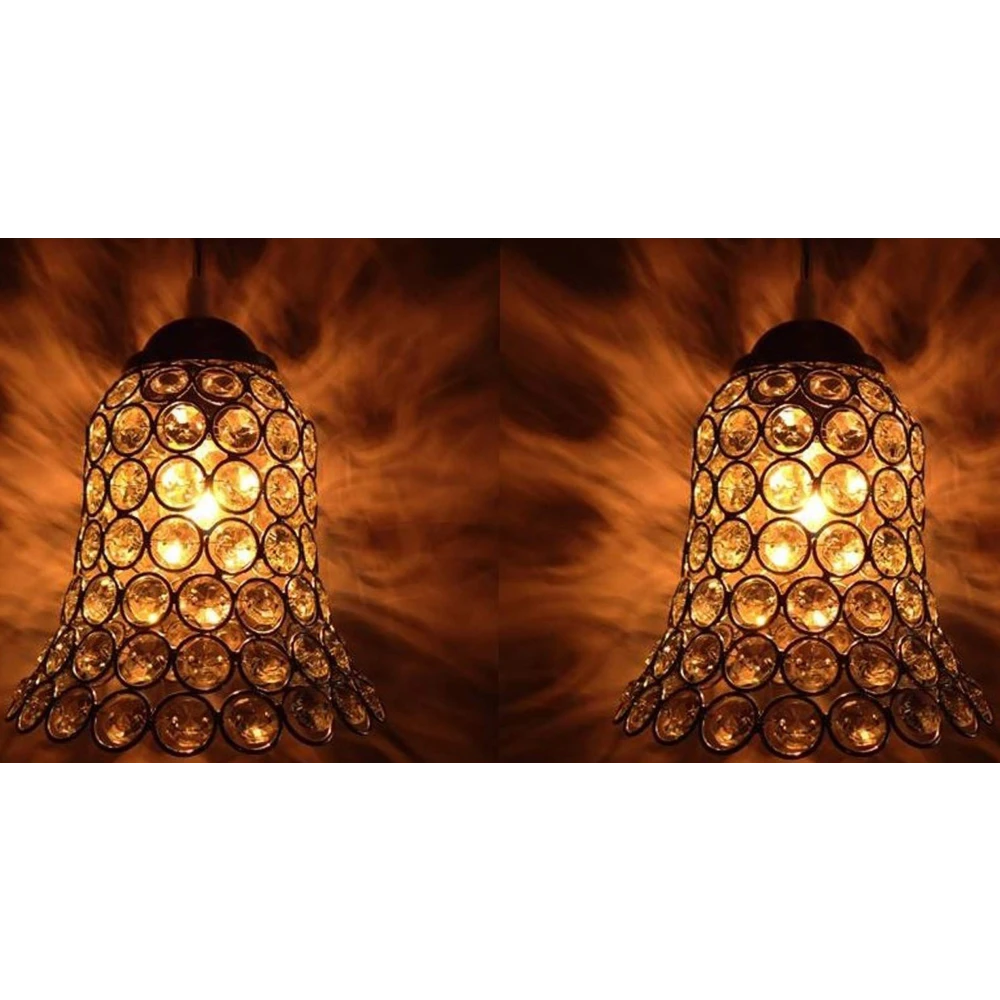
PRMOAGEN 2 Pcs Crystal Chandelier Light
🛒 View ProductFrequently Asked Questions
1. What is Dussehra and why is it celebrated?
Dussehra, also known as Vijayadashami, celebrates the victory of good over evil. It is commonly associated with Lord Rama’s victory over Ravana and, in several traditions, Goddess Durga’s victory over Mahishasura.
2. Why is Dussehra called Vijayadashami?
The word Vijayadashami combines “Vijaya,” meaning victory, and “Dashami,” referring to the tenth lunar day. The festival marks a day associated with victory, righteousness and the triumph of good over evil.
3. What is the story behind Dussehra?
One of the most widely known Dussehra stories comes from the Ramayana, where Lord Rama defeats Ravana after a battle to rescue Sita. The festival therefore symbolises courage, righteousness and the victory of good over evil.
4. Why is Ravana burned on Dussehra?
Ravana effigies are burned during Dussehra in many parts of India to represent Lord Rama’s victory over Ravana. Ravana Dahan is also seen as a symbolic reminder to overcome negative qualities such as arrogance, greed and injustice.
5. What is the connection between Navratri and Dussehra?
Navratri is observed over nine nights, while Dussehra or Vijayadashami is celebrated on the tenth day. In many traditions, Dussehra marks the conclusion of the Navratri festival period and represents victory and new beginnings.
6. How is Dussehra celebrated in different parts of India?
Dussehra celebrations vary across India. Popular traditions include Ramlila performances and Ravana Dahan in North India, Durga Puja celebrations in West Bengal, Mysuru Dasara in Karnataka and Kullu Dussehra in Himachal Pradesh.
7. Is Dussehra the same as Vijayadashami?
Dussehra and Vijayadashami are commonly used for the same festival day. However, the stories, rituals and ways of celebrating can differ depending on the region, community and local tradition.
8. What does Dussehra symbolise?
Dussehra symbolises the victory of good over evil, truth over falsehood and righteousness over injustice. It is also associated with courage, self-reflection, positivity and new beginnings.
Conclusion
Dussehra cannot be understood through just one story or one form of celebration.
The Rama–Ravana tradition, Durga Puja, Mysuru Dasara, Kullu Dussehra and other regional customs all give the festival their own meaning and character.
What connects these traditions is the idea of moving beyond negativity and beginning again with courage, faith and a stronger sense of what is right.
Celebrate the Festive Spirit with InteriorChowk
Preparing your home for Dussehra can be simple and meaningful.
Explore InteriorChowk's Pooja Essentials, Brass Items, Idols & Sculptures, Wall Décor and Ceiling Lights to create a festive space that suits your home and celebration style.